
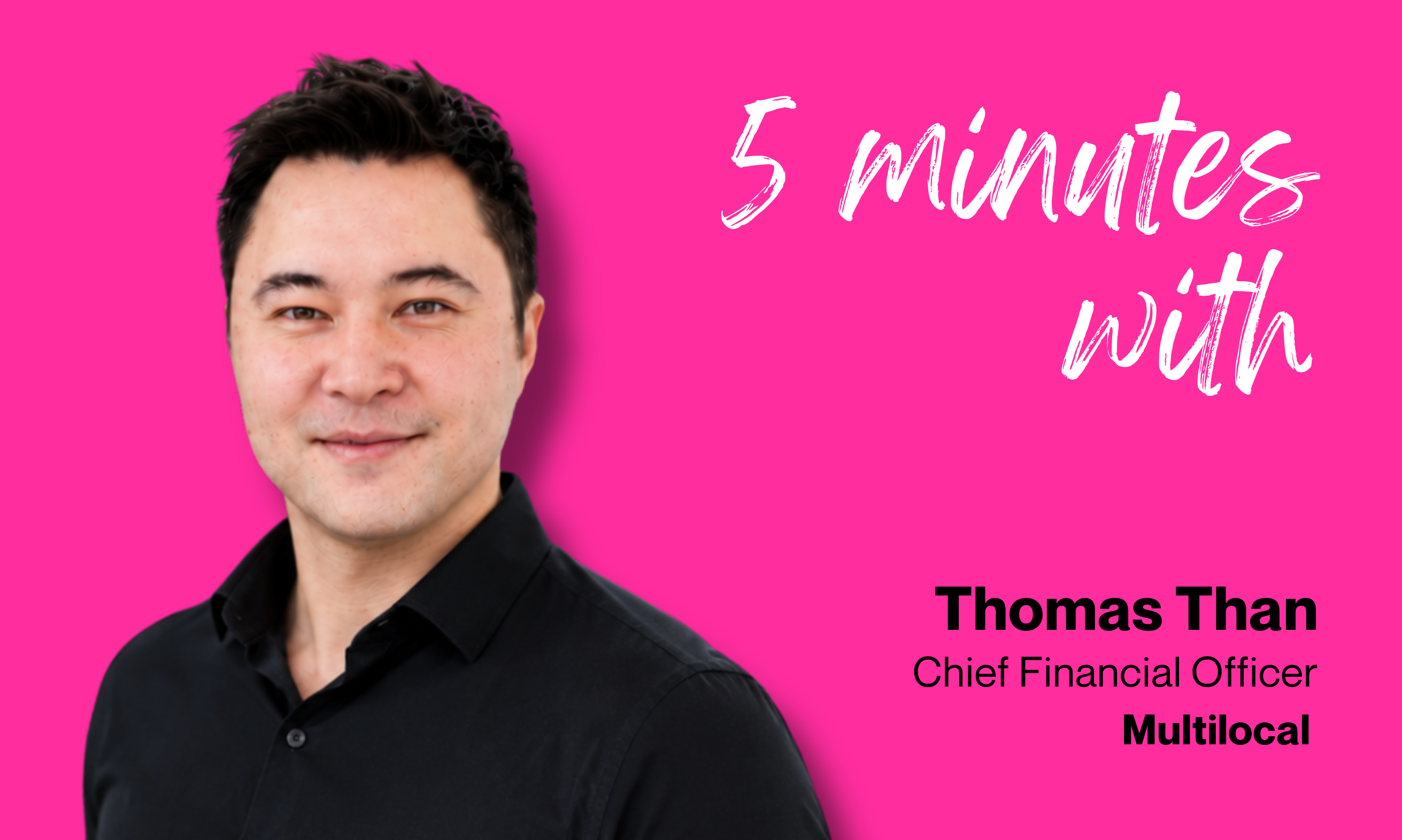
You spent 10 years working for major media businesses. Moving into the startup world with Multilocal, what did you have to adjust to? And were there any similarities to your previous companies?
Yes, having worked for one of the UK’s biggest media companies and the largest national news publisher, Sky and DMG, I took the plunge and joined Multilocal. And naturally, you don’t have the luxury of all the support teams and resources available in larger organizations. But what I love is the flexibility. Moving between finance, operations, strategy and commercial discussions (sometimes all in the same day) is exciting, but you must be comfortable in this environment and with being involved in multiple areas.
I had a grounding in these disciplines. At Sky, I learned the importance of strategic planning, commercial analysis and supporting decisions at a group level. And at DMG as CFO, I was closer to the operations and commercial side, so my experience has stood me in good stead at Multilocal.
What I also enjoy is the energy that comes from moving quickly. Unlike large corporations, decisions are made at speed, and you can see their impact in a short space of time.
And yes, there is a similarity with the large companies I worked for because the foundations of success remain the same irrespective of size. It all comes down to understanding your customers, making good commercial decisions and building a strong team. This is true whether you’re a 60-person start-up like us, or a FTSE 100 company. The only difference is the scale.
So, what attracted you to move into the AdTech space?
Like many in the industry, it’s not something I’d planned, but at the same time it felt like a natural progression from my background in media.
At DMG, I became increasingly focused on the commercial side of digital publishing and was heavily involved with MailOnline. This brought me into contact with programmatic advertising. Watching how it was transforming media sales gave me an appreciation of just how central technology was becoming in driving this. It sparked my curiosity and an interest in exploring the industry that was redefining advertising.
At the same time, the pull of working for a start-up appealed to me, potentially more so than AdTech itself. What Multilocal offered was the best of both worlds: the opportunity to combine my media background with the challenge of helping scale a high-growth technology business.
What are the biggest challenges facing start-up businesses in this industry, and which areas must receive the most attention?
It's got to be the pace of change.
In AdTech, nothing slows down. Arguably, it’s increasing. Whether it’s changing consumer buying behaviors and attitudes, regulation and, of course, AI’s impact, there’s a constant need to adapt to keep up. And the biggest challenge becomes focus. It’s so easy to be distracted by every emerging opportunity, making discipline a quality that’s needed. That’s why there’s the need to double down on what delivers sustainable growth for a business, and that’s solving the genuine problems customers struggle with – and doing this exceptionally well. This is the most important thing. We’re competing with some big players in this space with [big] resources, so making sure we’re executing as effectively as possible is critical.
Ultimately, it’s all about striking a balance between the need to innovate and remain agile, which are strengths of start-ups, and having in place the financial discipline, planning and governance which bring stability.
You may have the title of CFO, but your role is much more than that. What core areas do you get involved in, and what do you see as your primary objective?
That’s correct. I was brought in to not only cover finance, but our people and business operations functions as well. It’s not uncommon in startups to have these under one head because there are a lot of crossovers between the functions, all of which are essential when scaling a business.
It’s a wide remit and includes helping to make smart commercial decisions, supporting short- and long-term growth and developing the processes and platforms the business needs. Alongside this is the assessment of our organisational structure, hiring requirements and the development needs of our staff.
What it comes down to is creating those firm foundations that let the business and teams be successful. My team and I provide the platforms, tools, structures and insights they need to do their jobs and remove anything that distracts them from achieving their objectives.
Traditionally, CFOs tend to be risk-averse. How would you describe yourself? And in such a fast-paced industry, is being risk-averse easier or harder?
Commercially balanced rather than risk-averse is how I see it. It’s treading that line between informed, disciplined decision-making and recognizing the need at times to act, even if you don’t have all the information.
In our industry, a big risk is moving too slowly. The speed of change in the market means you don’t have the luxury or time to analyze everything indefinitely. I’m helping the leadership team make the right decisions for the business through good information and strong financial visibility. Yes, there’s always a risk in a business decision, but I’m ensuring they understand it and it’s informed, so it's a calculated decision that supports growth.
Talking of a fast-paced industry, how do you approach future planning and transformational leadership when the speed of change is ever quicker? And how far can you realistically plan?
What I’ve learnt from working in large organizations and the startup world is that planning’s not about perfectly predicting the future: it’s about knowing where you want to be and preparing a business to respond to that to be successful. While it’s possible to plan strategically over the long term, it’s at the operational level you must be flexible. Ultimately, the destination shouldn't change, but how you get there will.
In the big organizations I’ve worked for, planning cycles were longer and more structured with the resources to support this. At Multilocal, yes, we have a long-term vision, but we’re consistently reviewing our plans, assumptions and priorities because things change from week to week and day to day, and we must be in the best position to respond.
So, how do you see programmatic advertising evolving in the next two years?
I’d say, given the speed of change today, can we adequately grasp where programmatic will be in two years?
We'll see it become more intelligent, efficient, and results focused. As advertisers increasingly look beyond scale and place more emphasis on measurable outcomes, AI will play a critical role in facilitating, delivering and optimising campaigns. But I approach it as an enabler that’s supporting, rather than replacing, strong human-driven strategy and trusted partnerships. In such a fast-moving industry, the businesses that succeed will be the ones that stay agile, maintain human oversight, continue to innovate and adapt quickly to changing client needs.
